
Fruits and vegetables
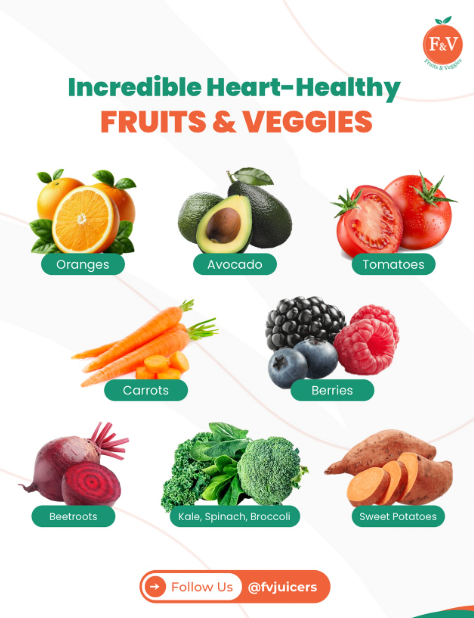
Studies consistently find that diets rich in fruits and vegetables are associated with reduced risk of cardiovascular disease. Fruits and vegetables play an important role in heart health because they contain antioxidants that can help prevent injuries to the arteries. Aim to eat a variety of fruits and vegetables — fresh, canned, or frozen.
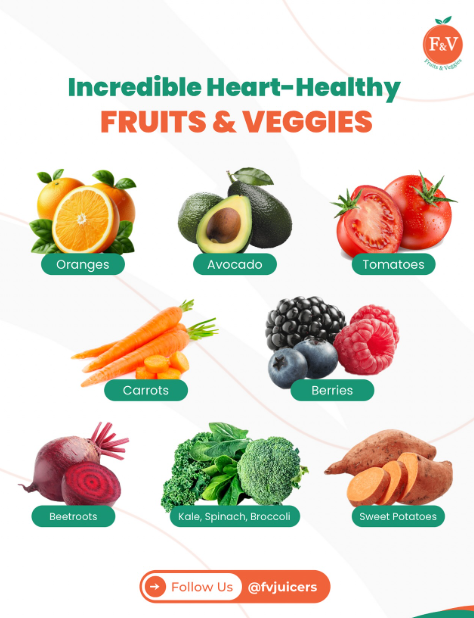
Aim to get as many colors of vegetables as possible into your daily diet. Choose tomatoes, peppers, edamame, beets, and carrots.
Leafy greens such as kale, spinach, and bok choy are packed with vitamins, minerals, and antioxidants, which can help lower blood pressure and reduce the risk of heart disease. Leafy greens are rich in nitrates, which help to relax and widen blood vessels. Research has found that people who ate the most nitrate-rich vegetables (especially leafy greens) lowered their risk of cardiovascular disease by 12% to 26%.
Opt for canned vegetables that are low in sodium.
Look for frozen vegetables without added butter or sauces.
Focus on fresh fruits like berries, apples, oranges, bananas, mangoes, guava, and papaya. Berries like strawberries and blueberries are also excellent for heart health, as they are packed with antioxidants, which protect against oxidative stress and inflammation that can contribute to the development of heart disease. Studies associate regular, moderate intake of blueberries with reduced risk of cardiovascular disease.
Choose canned, frozen, or dried fruit without added sugars.